
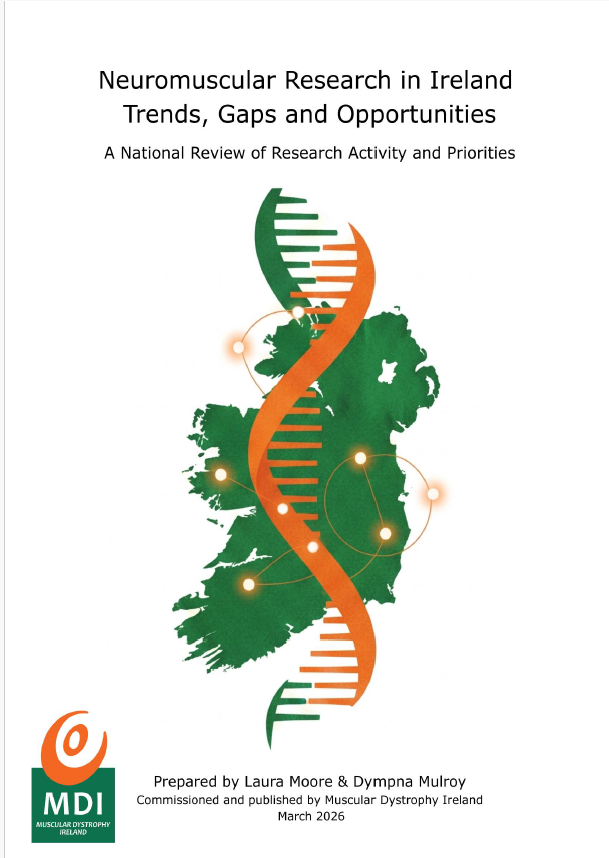
Exploring Neuromuscular Research in Ireland: Trends, Gaps & Opportunities
Muscular Dystrophy Ireland (MDI) is pleased to share our new research landscape review, Neuromuscular Research in Ireland: Trends, Gaps & Opportunities (1990–2025), together with an Executive Summary of its key findings.
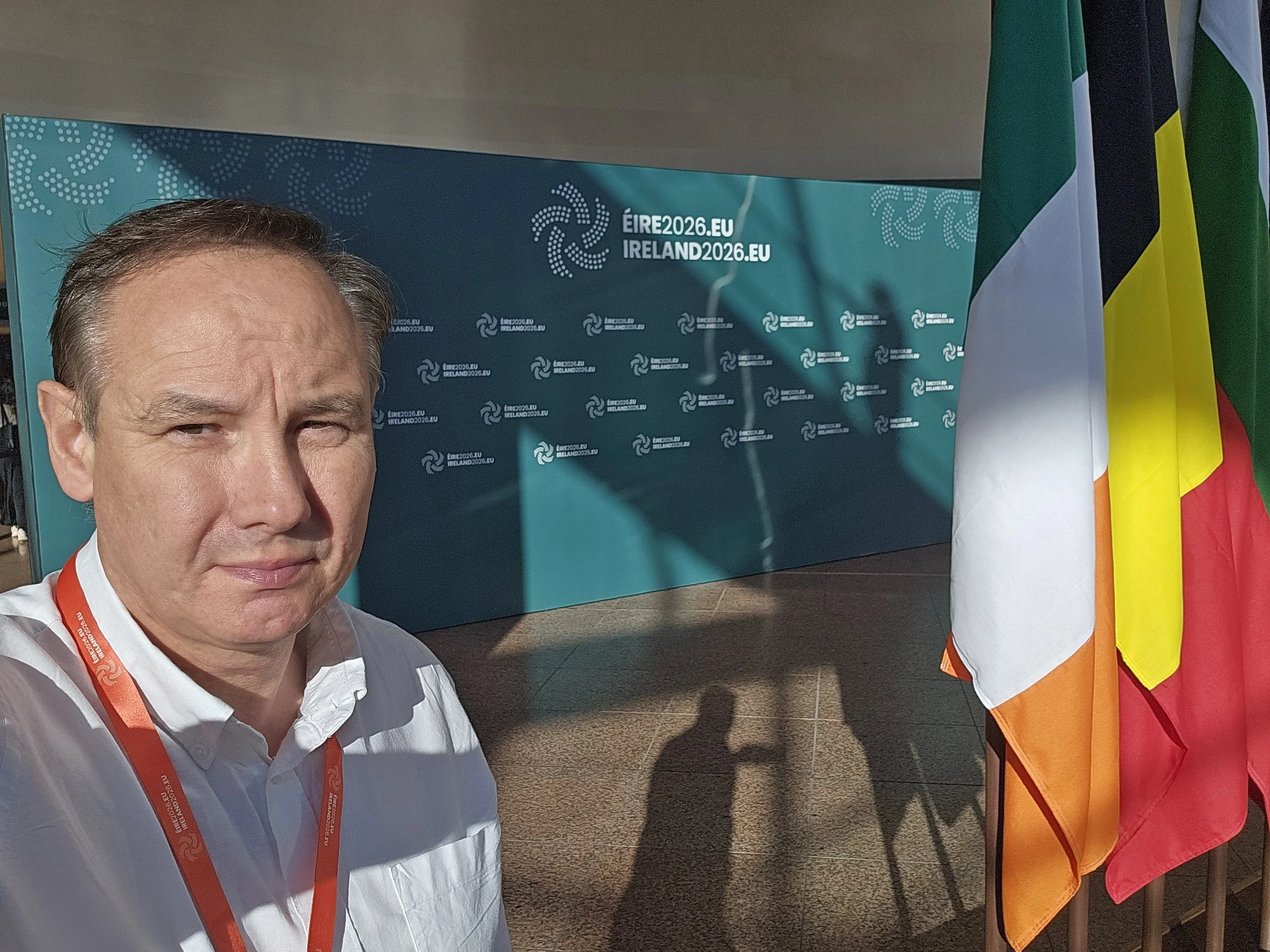
MDI at the Irish Presidency Conference: Closing the Gap Between Approval and Access
I was delighted to receive an invite from the Minister of Health Jennifer Carol MacNeil to attend the Irish Presidency Conference on Clinical Trials and Medicine Access today. The conference is essentially about how Europe can make the journey from medical research to patient access to medicines faster, more effective and more sustainable. Looking at why there can be a significant gaps between a medicine being developed/approved and patients actually getting access to it across Europe!!

MDI Supports New Research into the Transition to Adulthood for Young People with DMD
Muscular Dystrophy Ireland is delighted to be co-funding a new research project aimed at improving support for young people with Duchenne Muscular Dystrophy as they transition to adulthood.

Advancing Muscular Dystrophy Research Through Partnership
As part of Muscular Dystrophy Awareness Month, we’re delighted to highlight MDI’s successful partnership through Research Ireland’s Enterprise Partnership Postgraduate Scheme, mentoring an early-career researcher at Royal College of Surgeons Ireland (RCSI) University. This exciting partnership is helping to advance research into Duchenne muscular dystrophy (DMD) while supporting the next generation of researchers in the field.
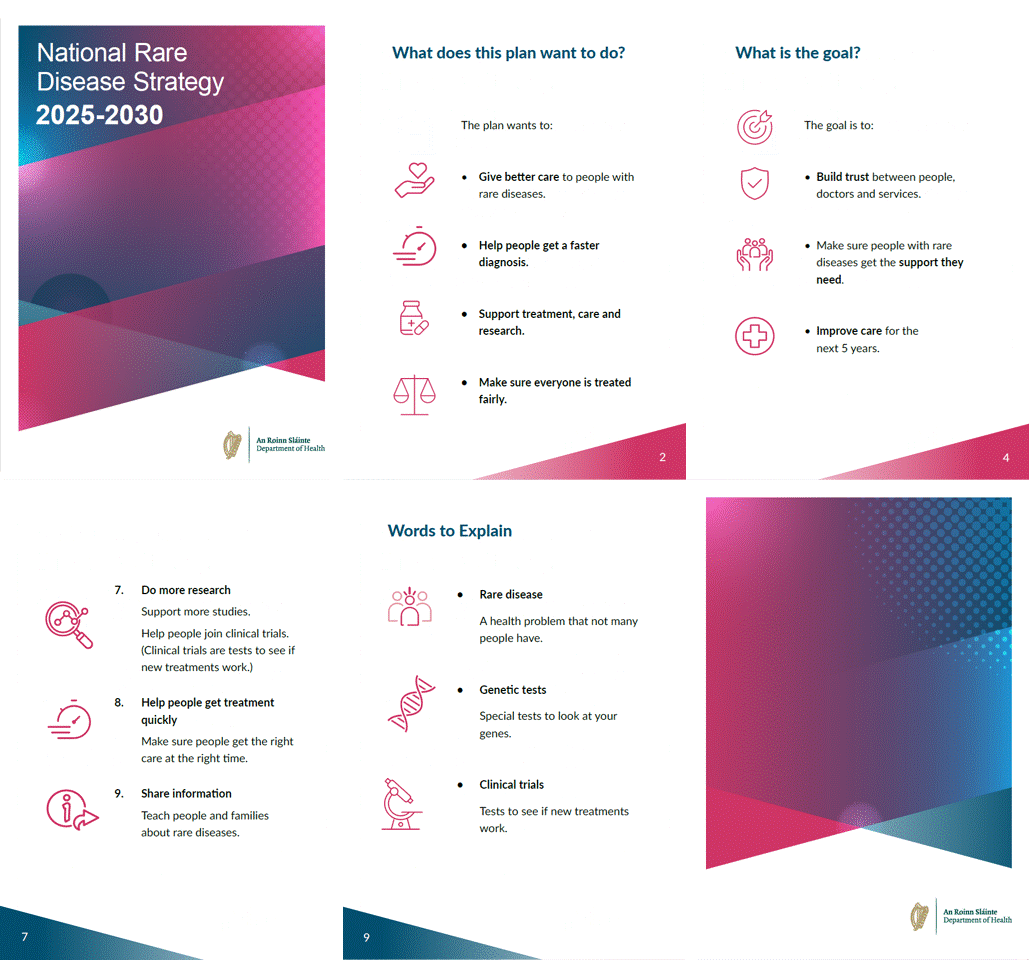
Expression of Interest (EOI) - Patient Partners for the National Rare Disease Strategy Implementation Programme
The National Rare Disease Office (NRDO) is pleased to launch an Expression of Interest (EOI) process seeking Patient Partners to participate in implementation of the National Rare Disease Strategy 2025-2030. Patient Partners will contribute to National Rare Disease Strategy Workstream Groups and the Patient Partnership Forum, working alongside patient advocacy organisations, clinicians, researchers, healthcare professionals, policymakers, and other stakeholders to help shape and inform implementation of the Strategy.
A momentous day for the Friedreich ataxia community in Ireland
MDI welcomes the HSE’s decision to approve reimbursement of Skyclarys (omaveloxolone) for eligible adults living with Friedreich ataxia in Ireland. This decision comes after months of campaigning which saw the whole community come together, with people across Ireland getting behind the campaign and supporting people living with Friedreich ataxia and their families.
Important Milestone for Risdiplam Access for Adults with SMA in Ireland
MDI is delighted to share an important update in our campaign for equal access to treatments for adults living with spinal muscular atrophy (SMA).
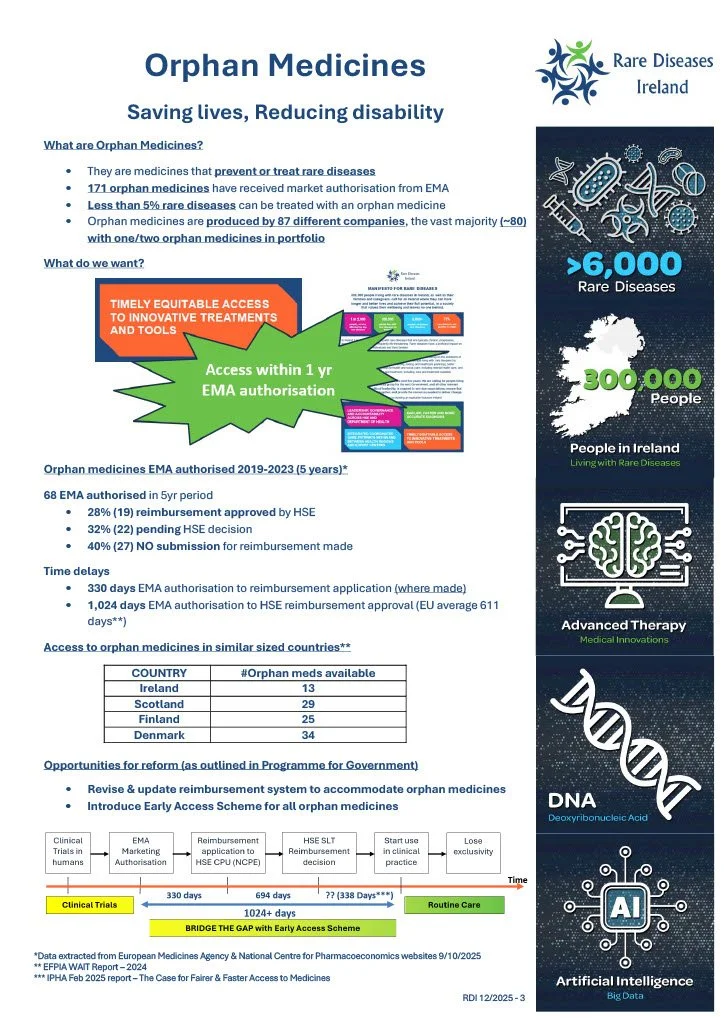
Only 37% of orphan medicines are reimbursed in Ireland. Rare Diseases Ireland calling for faster access.
Rare Diseases Ireland has highlighted a critical issue: 163 orphan medicines now have EU approval, but people living with rare diseases in Ireland face long delays getting access. They're urging the Minister for Health to establish an Early Access Scheme so patients can get life-changing treatments within one year of approval, not years down the line.
Calling All SMA Researchers: International researchers are invited to explore two exciting funding opportunities.
International researchers are invited to explore two exciting funding opportunities currently available from SMA Europe and Cure SMA. Both organisations have active grant calls supporting research that aims to advance our understanding of spinal muscular atrophy (SMA) and improve outcomes for people living with the condition.
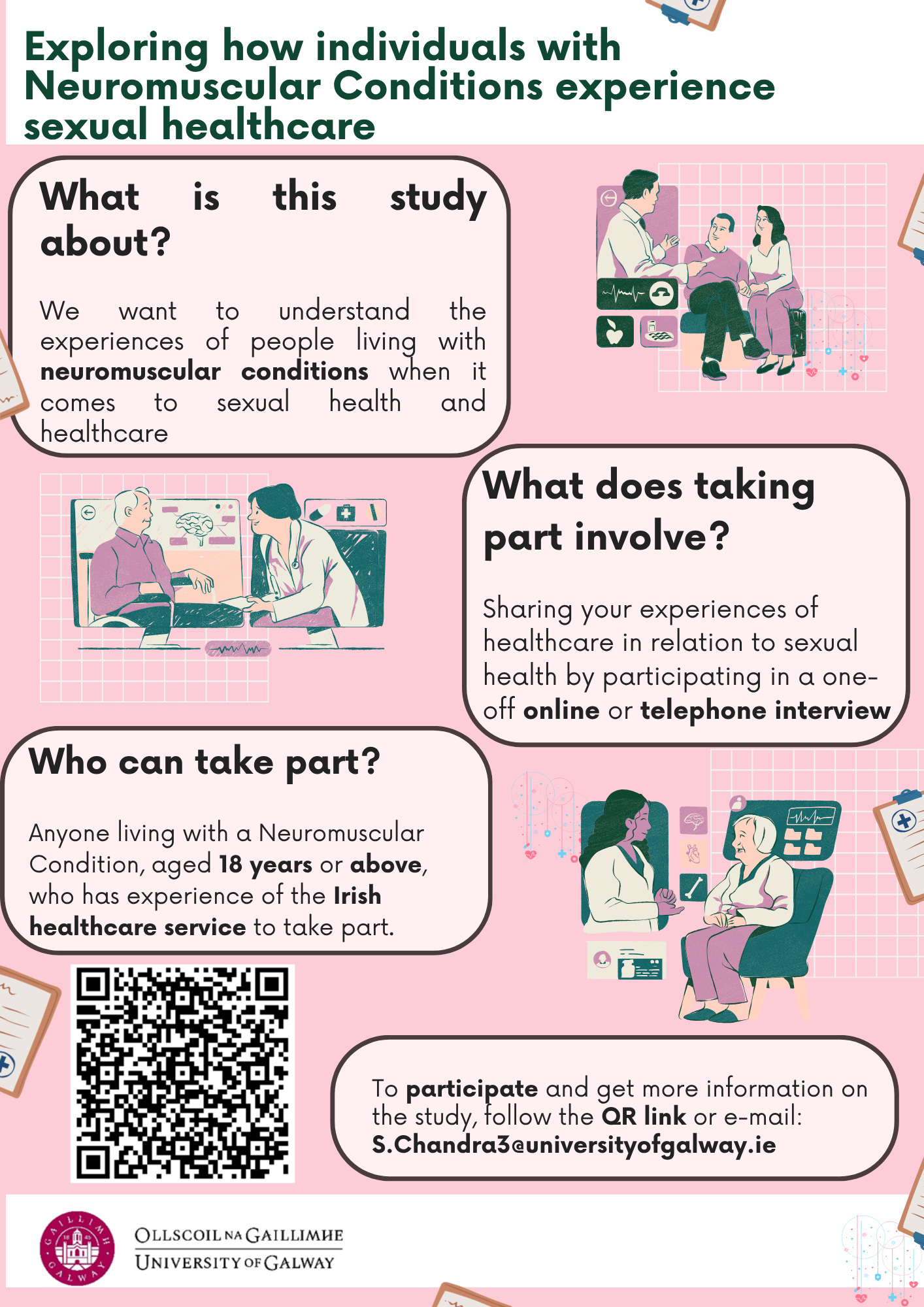
Have you lived with a neuromuscular condition and accessed healthcare services in Ireland?
A Master's student from the School of Psychology at the University of Galway is conducting a study exploring experiences of sexual healthcare among people living with neuromuscular conditions in Ireland.
The European Commission has granted marketing authorisation for SMA treatment Itvisma
The European Commission has granted marketing authorisation for Itvisma (intrathecal formulation of onasemnogene abeparvovec, developed by Novartis) for the treatment of adults and children aged 2 years and older living with 5q spinal muscular atrophy (SMA). The European Commission’s decision follows the positive opinion adopted by the Committee for Medicinal Products for Human Use (CHMP) in April 2026.

Hope for families as HSE moves to approve Duchenne drug givinostat: Prime Time speaks to campaigners and Minister for Health
Families affected by Duchenne muscular dystrophy received welcome news this week, as the HSE drugs group recommended approval of givinostat, a treatment that can help slow the progression of the condition.
![[RTÉ News] 'Time is muscle' - decision urged on rare disease medicine](https://images.squarespace-cdn.com/content/v1/63c138561d3afd3c27c17d5d/1780591796791-P9MCQ6K5TEIAM4OA44CR/00246a30-800.webp)
[RTÉ News] 'Time is muscle' - decision urged on rare disease medicine
The parents of a child with a rare muscular disease are urging that the State does "not delay any longer" in making decisions on access to a drug that has been approved for use in Europe but has not been approved for reimbursement in Ireland.
![[RTÉ News] Father of rare disease patient fears losing second son](https://images.squarespace-cdn.com/content/v1/63c138561d3afd3c27c17d5d/51c88199-b155-4ab1-ad5e-dec7d8adbec8/00246f91-800.webp)
[RTÉ News] Father of rare disease patient fears losing second son
Patients with rare diseases and their families travelled to Leinster House to call for action on access to new medicines.The group is calling on the Government to introduce a dedicated new line item in the Budget for new drugs, a review of the reimbursement scheme and an expansion of the Early Access Programme.

Your Rare Disease Journey Matters — Share It in 30 Minutes with Rare Diseases Ireland
Rare Diseases Ireland is testing a new questionnaire designed specifically to capture the healthcare experiences of people living with rare diseases and their caregivers. The questionnaire was built specifically for rare diseases - covering the things standard questionnaires always miss, like how long it took to get a diagnosis, or what it's like coordinating care across multiple specialists.

EMA Committee Backs Novartis Gene Therapy Itvisma for SMA Patients Aged Two and Over
On 23 April 2026, the European Medicines Agency (EMA) Committee for Medicinal Products for Human Use (CHMP) issued a positive opinion for Itvisma, a gene therapy for people aged 2 years and older living with spinal muscular atrophy (SMA).


Clinical Trial Update: Early Results Published for DM1 Investigational Therapy
Pharmaceutical company PepGen has published preliminary results from the first phase of its FREEDOM2-DM1 clinical trial, which is investigating a potential new therapy for people living with myotonic dystrophy type 1 (DM1).
Campaign for Friedreich's Ataxia Treatment Access Continues — Read the Latest
FARA Ireland's April 2026 Advocacy Bulletin details the latest steps being taken to secure reimbursement of SKYCLARYS for people living with Friedreich's Ataxia in Ireland. Download the full bulletin for an update on where things stand.

Minister for Health announces introduction of screening for Severe Combined Immunodeficiency and Spinal Muscular Atrophy
Muscular Dystrophy Ireland warmly welcomes the introduction of testing for spinal muscular atrophy (SMA), commencing today as part of the expansion of the National Newborn Bloodspot Screening Programme