Research News
The pathway outlines recommendations for the key specialists and services involved in DMD care, supporting coordinated and consistent care for children, young people and adults living with DMD.
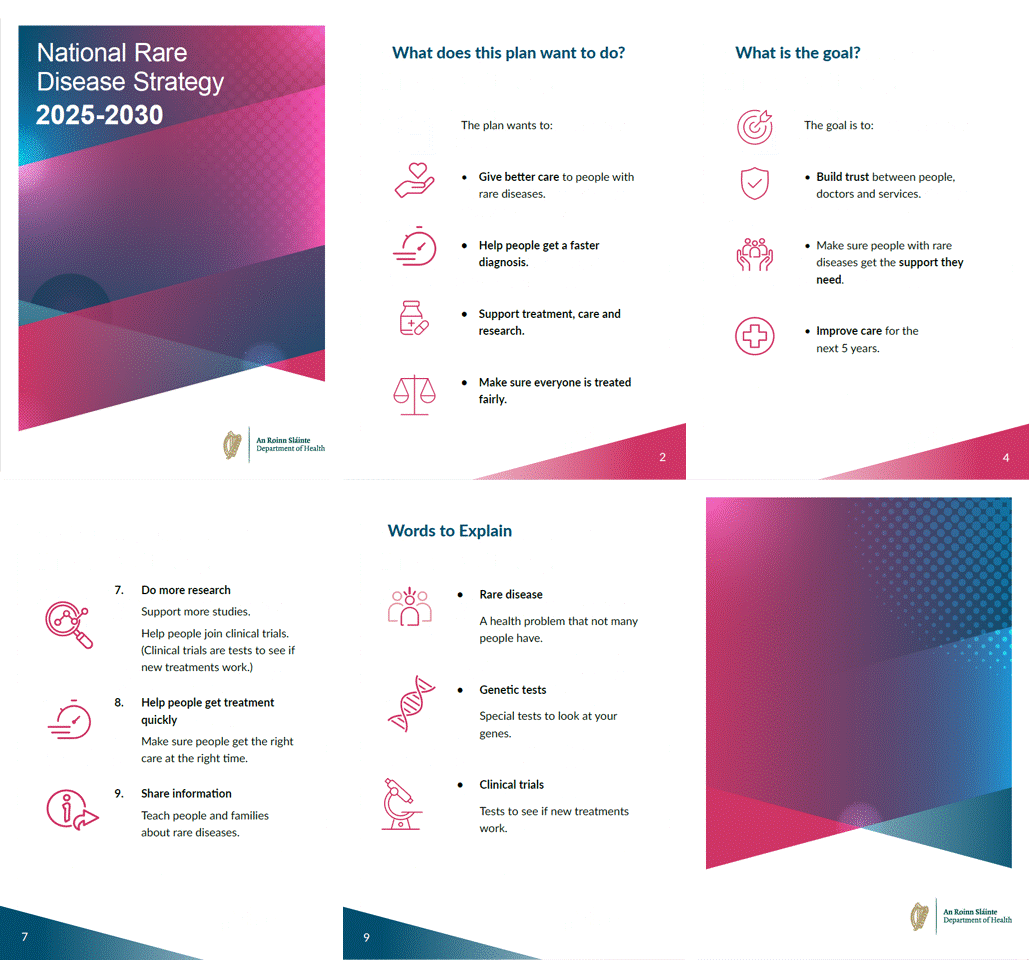
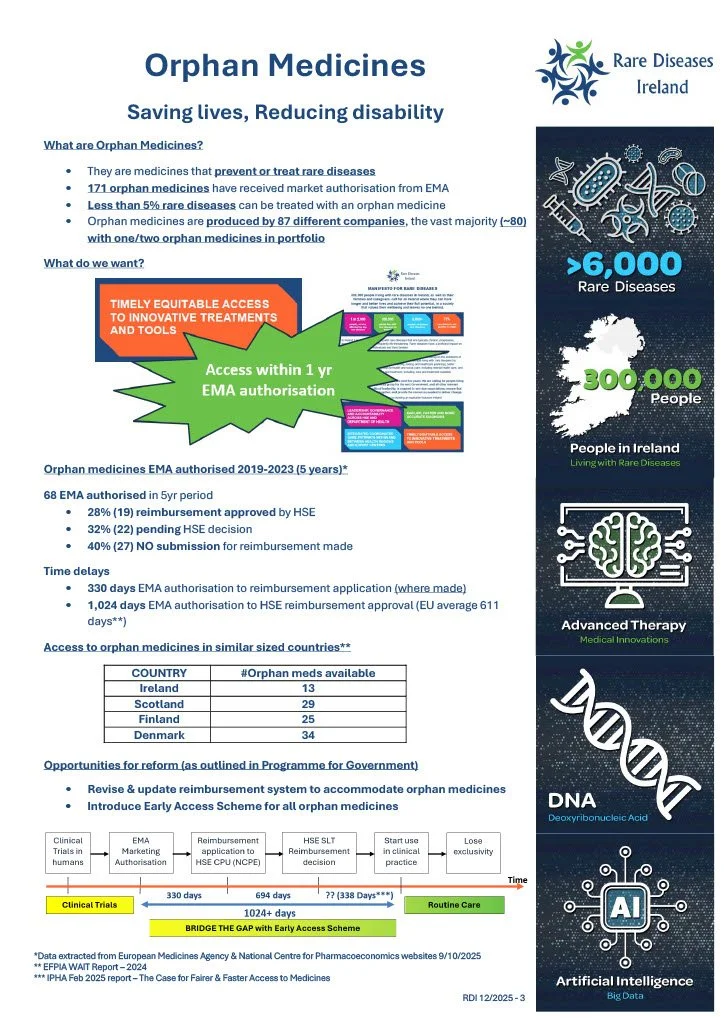
MDI provide a written submission to the Joint Committee on Health on issues relating to rare diseases, including access to and reimbursement for medicines.
A review is under way to decide if Givinostat for Duchenne muscular dystrophy will be reimbursed in Ireland. Your experience of living with Duchenne can help inform this decision - share your story in the survey link.
Researchers at DCU are examining the supportive care needs of people with pre-existing physical disabilities who are diagnosed with cancer.
Have your say on what matters most when accessing and using community-based healthcare services. A PhD Researcher in Health Economics at University College Cork, is exploring how community-based healthcare services can better support people living with neuro-physical disabilities. The results will give a clearer picture of how to design community-based care that truly meets the needs of people with neuromuscular and other neuro-physical conditions. This evidence will help guide public policy, reduce inequalities, and improve social wellbeing and sustainability.
As part of IPPOSI’s Patient Capacity Building Programme, IPPOSI is delighted to host an online information webinar in collaboration with ClinicalTrials.eu – a new European Union platform designed to make clinical trial information more accessible to the public.
In 2024, Dr. Finiki Nearchou and her team at UCD, in partnership with MDI, completed a study on the psychosocial needs of adults with muscular dystrophy and similar neuromuscular conditions.
Please join us in asking your local TDs and senators to keep this matter on the political agenda by attending a briefing on the campaign at the Audio-Visual Room, Leinster House at 2.30pm on Wednesday 11 June. and leveraging your role as you elected representative to highlight the importance of timely and planned action. Time is muscle and delays in reimbursement risk excluding eligible children simply because the disease progresses while they wait.
Caring for a child with a Rare Disease comes with financial, social, and emotional challenges. Share your experiences in a 30-min survey. Your voice matters—help shape better support systems.
The HSE is working on a new plan (called an integrated approach) to help improve care for people with a neurological condition. A neurological condition is when the brain, spinal cord, or nerves aren’t working properly. Some examples include Parkinson’s disease, epilepsy, head trauma, multiple sclerosis, motor neurone disease, headache (and migraine). We want to hear from people who use these services—patient and service user partners — so we can help improve care together.
MDI has joined FSHD Europe, a key alliance supporting patients with facioscapulohumeral muscular dystrophy across the continent, aiming to improve diagnosis, care, and treatment access. We also recently took part in the TREAT-NMD Annual Curators Meeting, gaining valuable insights as we continue to develop a national neuromuscular registry for Ireland. Lastly, MDI highlights the role of patient organisations in Health Technology Assessments (HTAs) — a crucial step in securing access to new treatments. We may seek patient input for upcoming HTA submissions, so stay tuned for future opportunities to share your voice.
Last November, we emailed everyone on our dataset asking them to prioritise a list of research themes. The survey was also handed out at the MDI conference. Thank you to everyone who took the time to respond. Below is a graph showing the ranking of participants priorities.
The All-Ireland Rare Disease Interdisciplinary Research Network (RAiN) brings together a broad range of interdisciplinary professionals and patient representatives with an interest in research. As part of their efforts, they have established the Children’s Research Advisory Group (CRAG), a platform for children and young people with rare diseases to have a voice in guiding research. CRAG aims to ensure that research is relevant to the needs of young people by actively seeking their advice on what researchers do and how they approach their work.
Last year, MDI collaborated with the University of Galway, University College Dublin and Trinity College on three different research studies. A heartfelt thank you to everyone who participated in these studies. We are pleased to share the results of two of these studies below. The researchers from all three projects would like to extend their gratitude to everyone who took part in their study. Without your support, these projects would not have been possible.
MDI has a small group of PPI contributors who participated in two research studies last year. We are keen to expand this group and particularly welcome parents and caregivers of people with a neuromuscular condition