

Strengthening Global Ties: MDI Joins FSHD Europe, Advances Registry Work, and Supports Patient Voice in Access to Treatments
MDI has joined FSHD Europe, a key alliance supporting patients with facioscapulohumeral muscular dystrophy across the continent, aiming to improve diagnosis, care, and treatment access. We also recently took part in the TREAT-NMD Annual Curators Meeting, gaining valuable insights as we continue to develop a national neuromuscular registry for Ireland. Lastly, MDI highlights the role of patient organisations in Health Technology Assessments (HTAs) — a crucial step in securing access to new treatments. We may seek patient input for upcoming HTA submissions, so stay tuned for future opportunities to share your voice.

Shaping the Future: Top Research Priorities Chosen by the MDI Community
Last November, we emailed everyone on our dataset asking them to prioritise a list of research themes. The survey was also handed out at the MDI conference. Thank you to everyone who took the time to respond. Below is a graph showing the ranking of participants priorities.

Children’s and Young People’s Research Advisory Group
The All-Ireland Rare Disease Interdisciplinary Research Network (RAiN) brings together a broad range of interdisciplinary professionals and patient representatives with an interest in research. As part of their efforts, they have established the Children’s Research Advisory Group (CRAG), a platform for children and young people with rare diseases to have a voice in guiding research. CRAG aims to ensure that research is relevant to the needs of young people by actively seeking their advice on what researchers do and how they approach their work.

MDI Research Collaborations 2024: Highlights from Groundbreaking Studies with Irish Universities
Last year, MDI collaborated with the University of Galway, University College Dublin and Trinity College on three different research studies. A heartfelt thank you to everyone who participated in these studies. We are pleased to share the results of two of these studies below. The researchers from all three projects would like to extend their gratitude to everyone who took part in their study. Without your support, these projects would not have been possible.

Help Shape Future Research: Join Our PPI Group
MDI has a small group of PPI contributors who participated in two research studies last year. We are keen to expand this group and particularly welcome parents and caregivers of people with a neuromuscular condition

Medical Independent: New molecular technology required for SCID and SMA screening – HSE
The introduction of new molecular technology to the National Newborn Bloodspot Screening Laboratory (NNBSL) is required to implement screening for severe combined immunodeficiency (SCID) and spinal muscular atrophy (SMA), according to the HSE. The Executive indicated this was an additional requirement to the “substantial” body of work required to introduce any new condition to the programme.

Help Us Understand Pain in Children and Young Adults With Physical Disabilities
By sharing your experiences, you will help improve understanding, shape future research, and contribute to better supports aimed at reducing pain for children and young people with physical disabilities.
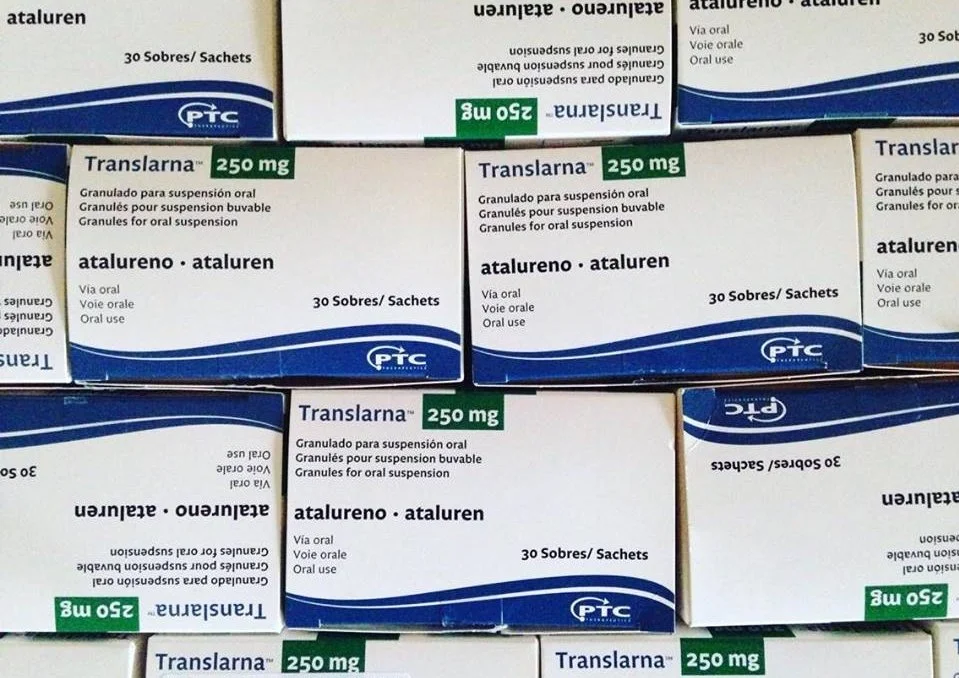
Translarna™ (ataluren) Market Authorisation Not Renewed by European Commission.
The European Commission (EC) has announced that it will not renew the market authorisation of Translarna™ (ataluren) for treating nonsense mutation Duchenne muscular dystrophy. After re-examining the data, the EMA’s human medicines committee (CHMP) concluded that the effectiveness of Translarna could not be confirmed.

Collaboration with Brona Mulligan – Exploring Health-Related Quality of Life of Adults living with Neuromuscular Conditions
MDI had the pleasure of collaborating with Brona Mulligan, who was completing her Master’s in Health Psychology at the University of Galway. A dedicated group of PPI contributors - individuals with lived experience of neuromuscular conditions - worked closely with Brona to help shape her research question and played an integral role throughout the research process.

Call of interest: Global DMD Adult Group
In the coming months, the group hopes to expand these discussions, focusing on issues like navigating life’s milestones differently, especially as adults with DMD and BMD face unique challenges in adulthood. In collaboration with the World Duchenne Organization, the group intends to explore themes such as independence, relationships, and navigating life transitions.

New Resource Available: Becker Muscular Dystrophy Guide for Families Now in English!
This guide offers an accessible yet comprehensive overview of BMD, providing essential information on the condition’s many aspects. Available in digital format, it’s a valuable resource for patients and families seeking clarity and guidance.

EMA Recommend Against Renewing Translarna for DMD
The Committee for Medicinal Products for Human Use (CHMP), part of the European Medicines Agency, has again advised against renewing approval for Translarna (ataluren), a drug used to treat Duchenne muscular dystrophy (DMD) caused by a nonsense mutation in the dystrophin gene.

Inclusion of children and young people in clinical trials across Europe
The aim of this group is to facilitate the inclusion of children and young people in clinical trials across Europe avoiding any language barriers. The group recently identified that some patients could not take part in a clinical trial because they do not speak the official language of the country where the trial is performed.

MDI is a proud member of Health Research Charities Ireland and supports the HRCI manifesto
HRCI members demand a strong, forward-thinking Programme for Government which includes a genuine commitment to improving health outcomes and reducing the burden of illness. Investing in health research (including life sciences, clinical research and all forms of R&D in health) is a commitment to the well-being of the population, the advancement of medicine and care, and the overall prosperity of our society.

September 30th is Limb Girdle Muscular Dystrophy Awareness Day!
Limb Girdle Muscular Dystrophy Awareness Day is an annual collaborative effort to globally raise awareness of individuals living with limb girdle muscular dystrophy (LGMD).
Brain Involvement in Dystrophinopathies (BIND) Project
The BIND project is the first large-scale effort to better understand brain involvement in Duchenne and Becker Muscular Dystrophy (DMD and BMD). Funded by the EU, it brings together 19 partners from Europe and Japan. While muscle weakness has been the primary focus in recent decades, brain involvement has received less attention.

September 25th is World Ataxia Awareness Day
International Ataxia Awareness Day (IAAD) is on September 25th of each year. It is a coordinated effort from individuals and Ataxia organizations around the world to help shed light on this rare disease. NAF is committed to leading the way on this outreach effort – but we need your help! We encourage individuals and disease organizations to join us by planning events and/or awareness campaigns for IAAD.

Today is World Myositis Day!
Myositis is an inflammatory autoimmune condition that can cause muscles to become weak and painful. Idiopathic inflammatory myopathies are an umbrella term for the different types of myositis. These autoimmune conditions mean the body attacks its own muscles, connective tissue, blood vessels, skin, lungs, and other organs. This often occurs together with other symptoms, such as muscle swelling, pain, fatigue, difficulty moving limbs or lifting arms, increased falls, trouble swallowing, and others.

This Week is World Mitochondrial Awareness Week!
World Mitochondrial Disease Week raises awareness about mitochondrial diseases (mito). It aims to improve the lives of people affected by mito and to increase awareness among doctors and the general public.

Today Is International Myotonic Dystrophy Awareness Day!
The colour green has been chosen to represent International Myotonic Dystrophy Awareness Day which takes place on 15 September and many buildings throughout the world will be lit up green on the day! As MDI’s News Update focused on Myotonic dystrophy last January, we are happy to provide an update on research developments since then.