
An Irish-italian Marriage, A Delicious Cookbook, And A Tragic Genetic Condition.
Mary Kenny. For the Irish Independent; filing on 12/08/26.
However successful or high-achieving someone seems, you never know what problems or suffering they may have privately faced.
When I was a schoolgirl in Dublin many years ago, the cleverest girl we knew was called Paula Eagar. To the envy of the rest of us, Paula always came first in everything, acing every exam, and was held up as a model pupil by the Loreto nuns.
Paula was a diligent girl, slim and neat, with bright red hair. Her father, a soldier, was known to be keenly ambitious for his children. The family hadn’t much money, but every sacrifice had to be made to educate his six children to the highest standard.
Paula went on to shine at UCD in French and Italian – where she was offered a lectureship on graduation. But she’d won a scholarship to the prestigious Cattolica University in Milan and so moved to Italy. Her classmates heard later – how romantic! – that Paula had married a dashing Sicilian, Aldo Furnari, when she was aged 22. They were to have three children.
Recently, I was contacted by Paula’s daughter Maria Grazia, a vibrant woman in her fifties who was publishing an online cookbook about Irish-Italian cuisine, in partnership with her Irish aunt, Monica Haughey. The cookbook is to support research into a rare genetic disease, myotonic dystrophy. Paula had been diagnosed with this disorder in 2001, aged 47.
Myotonic dystrophy is a genetic muscular condition of progressive weakness, affecting the heart, eyes and stomach. There is research into the condition in Milan in Italy, and in Ireland, by Muscular Dystrophy Ireland. Paula died in 2009, aged 65 from lung cancer; this was indirectly linked to the muscular condition.
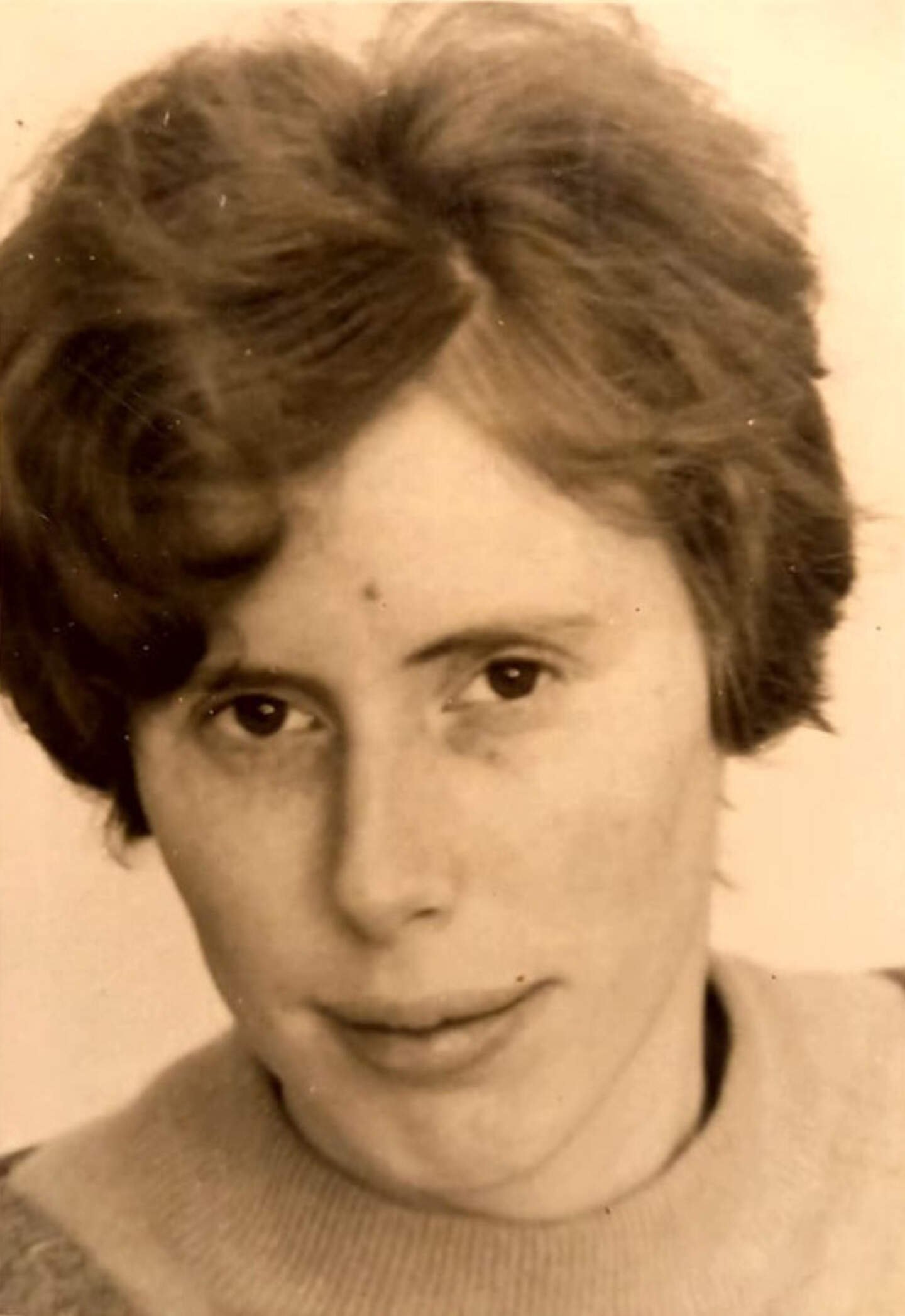
Paula Eagar © Maria Grazia Furnari
Tragically, Paula’s son Carmello, also afflicted, died from the illness in 1991, aged just 22, which devastated the family. Her younger daughter, Sara, is being treated for it in the Milan clinic. There is no cure but there can be alleviation.
Maria Grazia, Paula’s elder daughter, has not inherited the illness, and neither have her two children. But most of Paula’s siblings have died from myotonic dystrophy.
Maria Grazia contacted me partly because of her fervour for Italian food, and her desire to raise awareness of this distressing genetic disease; but also because she just wanted to remember, and cherish the memory of her mother. Anyone who knew her mother might bring that bond closer, she hoped. She wanted to connect with, and understand her mother better, retrospectively.
Paula had taught in Sicily - they lived in Catania, near Mount Etna - at university level, in school, and at the British Council in Naples. She’d also been active in Amnesty International for good causes. But there was a certain amount of culture-clash in the Irish-Italian marriage, which, Maria Grazia felt, had impinged on the children’s adolescence
Dad, the Sicilian, was “full of life, laughter and ideals”, while Paula was more reserved, disciplined and “not as emotionally available” as she felt Italian mothers were. Aldo “loved women and didn’t hide it” which an Irish wife thought “a source of worry”.
Paula, high-minded and ethical, also “couldn’t stand the Sicilian mentality” with favouritism prevailing over professionalism. So, although her life was a very productive one, she went through some rough times. She embarked on a personal journey of self-awareness.
Paula had psychological problems with her ambitious parents, Robert and Brigid. They were good people, but their unrelenting pressure to achieve made Paula feel “judged”. Paula’s mother had felt frustrated that she had been denied opportunities for women in her own lifetime, so her energies went into pushing her children. But Paula felt she could never reach the exacting standards her parents had set.
Although in one sense, the Eager parents did succeed: all their children were high achievers – doctors, lawyers, teachers. But for Paula, there was a psychological cost.
And yet the family remained close, and Paula would return to Ireland every two years, always bringing pure olive oil and Parmesan cheese with her.
The love of Italian food became a central part of family bonding, and it’s fitting that Maria Grazia should be an enthusiast – she’s even working on a second book of Italian cuisine, with a focus on regional sources and sustainability. Despite all that the family has been through, with the shadow of this genetic condition, Maria-Grazia, feels they’ve been “blessed”. Paula died a peaceful death surrounded by her family.
I actually hadn’t known Paula very well at school – I was in the dunce’s stream – but I’d admired her. Now, learning about her life and what she went through has forged a retrospective bond - and opened my eyes to the affliction of myotonic dystrophy.
Maria-Grazia’s lovely cookbook (The Secret of Great Italian Cooking) is available free on-line at: mgcfurnari@gmail.com - but please give a donation to Muscular Dystrophy Ireland at https://www.mdi.ie