
[The SundayTimes] ‘We taught Kajus to walk, now we watch as he loses that ability’
By Julieanne Corr
The mother of a ten-year-old boy with Duchenne muscular dystrophy (DMD) is appealing to the HSE to fast-track access to a potentially life-altering drug, saying "one of the hardest parts" of the disease has been watching her only child lose his ability to walk.
DMD, the most common form of muscular dystrophy in children, is a severe, progressive condition that leads to muscle weakness, loss of mobility and reduced life expectancy, which primarily affects boys. It is estimated that about 110 people in Ireland are living with DMD, the majority of whom are under 18.
Kajus Petrauskas from Navan, Co Meath, was five years old when he was diagnosed. He has been using a wheelchair for the past six months after his condition progressed at a "devastating pace" last summer.
His mother, Evelina Udevenkovaite, who is originally from Lithuania but has lived in Ireland for 20 years, said she first noticed symptoms when Kajus was just three.
"I noticed that he couldn't run or jump like other children his age," she said. "It took time to get him a diagnosis and it was only when we did a blood test and his creatine kinase came back high that we realised he had Duchenne. He had just started school and from that point everything changed. For most families, childhood is full of milestones — learning to run, to play sports, to grow stronger and more independent. For us, it means something very different. We live with the constant awareness that, despite every effort, Kajus is slowly becoming weaker."
The 30-year-old project manager said that while Kajus, who is in fourth class, is "one of the most positive boys you could ever meet", he now needs assistance going to the toilet and getting in and out of bed.
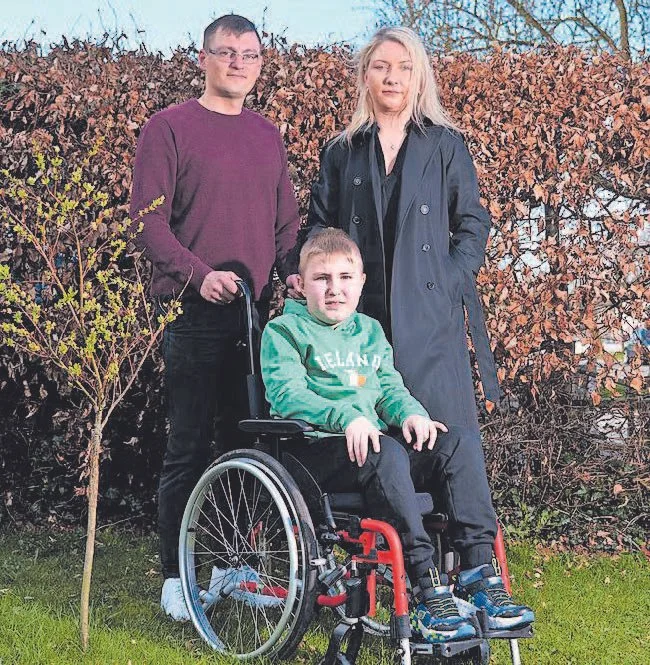
Evelina Udevenkovaite and Irmantas Petraauskas with their ten-year-old son Kajus at their home in Navan
"One of the hardest parts is watching your child lose something you once celebrated. We taught Kajus how to walk, and now we are watching him slowly lose that ability."
Givinostat, the brand name for Duvyzaz, is a histone deacetylase inhibitor that slows the progression of DMD by reducing inflammation and muscle deterioration. It was approved by the European Medicines Agency in June last year, but in March the National Centre for Pharmacoeconomics (NCPE) recommended that the HSE should not fund the treatment due to its cost. The drug is developed by the Italfarmaco Group.
Jennifer Carroll MacNeill, the minister for health, said the next step is for the HSE to begin negotiations with the manufacturer "with a view to achieving the best possible commercial offer on behalf of the state".
The cost of the drug is estimated to range from €92,000 to €334,000 per patient annually, depending on weight.
Givinostat is indicated for a specific group of patients — primarily those who are still ambulant — meaning timing is critical for access. At present, Kajus can walk with support and stand while holding on to something. "We're hopeful that HSE will urgently progress in negotiations because every moment really counts," said Udevenkovaite.
"The challenge now is how we are going to talk to Kajus about this treatment in a world where information is everywhere online. We haven't had a full conversation with him about Givinostat yet, but we know that one day he will become aware.
"When he asks us, we don't know how we're going to answer. How do you explain to a child that a treatment exists that is helping other boys, but that he cannot access it because his time ran out? How do you ask a child to stay hopeful, to stay positive and keep fighting, if he knows that his opportunity may have passed while he was waiting?"
The drug has been approved in the United States, the United Kingdom and across Europe, with countries such as Scotland, Italy and Germany now moving through the final stages of making it available to patients through their public health systems.
Udevenkovaite said the cost of Kajus's care is also significant, with limited state support available as she and her husband both work full-time. "The reality is that a lot of supports are means tested, so even with both of us working, it's very hard to manage these costs — and you do start to feel like families like ours fall in between the cracks of the system."
This article was first published in The Sunday Times Ireland on 5 April 2026.